/PRZWT/ In 2026, the global energy landscape undergoes a profound transformation. The climate crisis and the digital revolution collide and interact. Energy is no longer merely a source of power; it has become the core carrier of a country's competitiveness, industrial resilience, and sustainable future.
Currently, the energy sector is accelerating its transformation towards decentralization, digitalization and low-carbonization. Energy demand is experiencing an unprecedented surge, and the industry is undergoing significant changes, which hold tremendous development opportunities. At this crucial juncture, Schneider Electric has officially upgraded its positioning to "the global leader in energy technology", providing integrated solutions of electrification, automation and digitalization to every energy-consuming unit from factories to households, and from power grids to data centers, promoting a double leap in efficiency and sustainability.
Gao Feikong, the Global Executive Vice President and Head of Energy Management Business of Schneider Electric, believes that China is not only the most dynamic market in this energy transformation that concerns the future, but also a source of innovation and a strategic main battlefield.
The Davos Forum has just concluded. Just a few days later, Gao Feikui hurriedly arrived in China and was present at the first Schneider Electric China R&D Conference. Over the past year, his management scope has expanded from energy management and service business to the overall coordination of energy management business, promoting the innovation of energy management technologies in fields such as buildings, infrastructure, data centers, industry and smart homes, and building a new type of power architecture for the future.
In the context of a dramatic restructuring of the global energy landscape, an exponential increase in computing power demand, and the push for transformation driven by climate goals, Gao Feike's actions precisely reflect this global energy technology giant's deep commitment to the Chinese market: "China is the main battlefield for Schneider Electric's energy transformation plan."
During the Davos Forum, Gao Feikang noticed that while the participants were discussing various solutions related to AI, they also focused on the huge pressure exerted on the energy industry by the high energy consumption of data centers, as well as the significant differences in energy policies among various countries.
When it comes to China, Gao Feike stated that Schneider Electric has been deeply involved in the Chinese market for many years and has a profound understanding of China's advanced policies in the field of electricity. What particularly impressed him was China's forward-thinking awareness and layout in the construction of power infrastructure. He recalled that as early as 2010, China had already demonstrated forward-looking and large-scale investments in areas such as nuclear power plants and ultra-high voltage power grids.
"At that time, other countries did not demonstrate such foresight and failed to make similar strategic investments," Gao Feike pointed out. "Nowadays, these countries find themselves struggling with sustainable development issues and even have to make certain compromises."
This forward-looking strategy is becoming increasingly valuable in the present. Gao Feike pointed out that with the global population growth and the expansion of the digital economy, energy demand is rising at a rate of approximately 6% per year. "It is expected that in the next five years, the global average annual growth rate of electricity demand will be about 50% higher than the average growth rate of the past ten years," Gao Feike cautioned. "This means that new power generation capacity must keep up." Given that large energy projects such as nuclear power plants typically require a construction period of five to ten years, lacking forward-looking planning will lead to a passive situation. In his view, the construction cycle of power infrastructure determines that it must be "ahead of the curve" - and China is a firm practitioner of this logic.
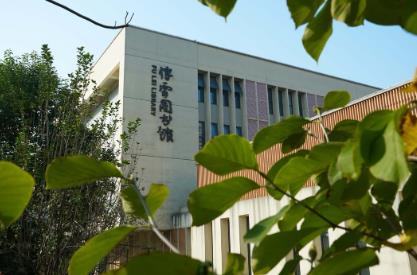
Today, China's energy transition has entered a new stage of refinement and systematization. Gao Feikui has a deep understanding of this. He said: Global energy demand is showing a continuous growth trend, and the scientific and efficient management of energy has become a key issue. Schneider Electric is precisely the expert in addressing this challenge. He gave an example of the Furley Library project - the AI-driven energy management system created by Schneider Electric for it, achieving an outstanding result of approximately 88% self-consumption rate of photovoltaic power and approximately 67% penetration rate of new energy in buildings, making it the world's leading LEED net-zero carbon certified library. "This technology has a broad promotion prospect, which impressed me greatly. We urgently need energy solutions that are cheaper, more energy-efficient, and more sustainable."
What is more worthy of attention is that the construction boom in China is shifting from "expansion by adding new capacity" to "optimization of existing resources". Gao Feike recalled, "When I lived in China before, tower cranes could be seen everywhere; but now, the number of new construction sites has significantly decreased, which indicates that the number of newly built buildings in China is declining." He observed that the energy-saving renovation of existing buildings will become the next big market opportunity. "We should focus more on the energy-saving and emission reduction renovations of existing buildings. This not only can effectively improve energy efficiency, enhance the self-production and self-consumption capacity of energy, but also bring considerable investment returns." This trend precisely aligns with the technical advantages of Schneider Electric in microgrids, distributed energy, digital energy efficiency, and adaptation and renovation in these fields.
If we consider electricity as the core and carrier of energy, and digitalization as the central nervous system that connects everything, then the core of energy transformation is to promote the digitalization transformation of energy through technological innovation. Only by fully integrating real-time energy management, automatic control, scalable software, artificial intelligence and services can we empower various industries such as buildings, data centers, power grids and infrastructure, enabling them to achieve efficient, intelligent and more sustainable operations.
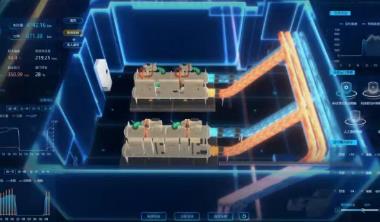
Gao Feikui introduced that Schneider Electric is based on the EcoStruxure framework, deeply integrating products, software, services with energy intelligent technologies to build an "nervous system" in the energy sector, creating a complete "end-to-end" solution that covers four terminal markets - buildings, data centers, industry, and infrastructure, and achieving energy management empowerment in all scenarios and throughout the entire chain.
In the current global atmosphere of widespread concern over whether "AI will replace humans", Gao Feike did not view it as a threat to the power industry workers. Instead, he was committed to building a new paradigm of human-machine collaboration - a truly "power-savvy" intelligent partner.
"We hope that AI can better understand our terms related to electrical engineering or electrical technology. We don't need to type or look at diagrams; instead, we can have a very natural conversation with it. It can help us handle complex operation and maintenance tasks." His expectations directly point to the core pain point of the current digitalization implementation industry: the separation of technical language and industry knowledge.
In the field of energy management, complexity stems not only from the equipment itself, but also from system integration, dynamic scheduling, and multi-objective optimization. This is precisely where the disruptive value of digital and intelligent technologies centered around AI lies. Taking photovoltaic power generation as an example, traditional operation and maintenance relied on a large amount of manual inspections and experience-based judgments. However, the intervention of digitalization can achieve efficiency improvement throughout the entire process from installation design to operation optimization. "By leveraging AI and other digitalization technologies, we can optimize the local consumption efficiency of photovoltaic power and reduce the burden on human labor during the installation process," emphasized Gao Feikui. Schneider Electric aims to "maximize energy efficiency and reduce costs" through digitalization, and its value is not only reflected on the customer side but has also been fully verified internally.
The "lighthouse factory" of Schneider Electric in Wuxi is a perfect embodiment of this concept. Leveraging the deep empowerment of digital and intelligent technologies, this sustainable lighthouse factory has achieved a 90% reduction in carbon emissions for Scope 1 and Scope 2. This "endogenous innovation" model ensures that the technical solutions have been refined and matured in real scenarios before being launched to the market. Behind this, there is a "self-centered" product philosophy: first solve one's own problems, and then empower thousands of industries.
The energy management driven by AI and digitalization technologies is also reorganizing the operation methods of the electrification companies. In the past, efficient operation relied on highly skilled engineers; in the future, front-line operators can obtain expert-level decision support through natural language interaction. This not only reduces training costs but also offers the opportunity to release human resources to engage in more creative work. As Gao Feike said: "Ultimately, we hope to simplify the entire process and optimize overall efficiency through AI and other digitalization technologies." Under the global trend of changing labor structures and expanding skill gaps, this "empowering rather than replacing" approach is the correct solution for the sustainable development of digitalization in the energy sector.
Schneider Electric's localization strategy has long transcended the initial stage of "operating in China and serving China", and has entered a new era of "establishing a presence in China and serving the global market".
China is one of the four global R&D centers of Schneider Electric and is the only country in the group that possesses the R&D capabilities for all business lines. It is at the forefront of R&D in areas such as medium voltage, low voltage, critical power, and digital energy efficiency. The innovative achievements of Schneider Electric in China not only deeply empower the high-quality development of the Chinese market but also continuously inject core momentum into the global business. Take DC products as an example, the related products developed in China are exported globally, and the R&D strength in the DC field is a benchmark in the global system of the group. This two-way empowerment ecosystem makes China not only one of Schneider Electric's most valued markets but also a source of innovation.
The foundation for this ambition lies in solid manufacturing and talent capabilities. As of the beginning of 2026, among the 9 "Lighthouse Factories" of Schneider Electric worldwide, 3 are located in China. The newly selected Wuhan factory has even been awarded the title of "Talent Lighthouse Factory", establishing a "full-cycle talent growth system" and facilitating the transformation of front-line employees from operators to "digital + sustainable" multi-skilled talents. Gao Feike emphasized: "China plays a leading role in the energy transition process, especially given that electricity accounts for the highest proportion in China's energy structure. I have great confidence in China, so I have established a strong team here, striving to be closer to the Chinese market."
Energy transition is not merely a technological competition; it is also a contest between institutional vision and execution resilience. China has provided a feasible path for the world through its systematic planning and large-scale practice. Schneider Electric's choice to focus on China as its "main battlefield" is not only an acknowledgment of the market potential but also a tribute to China's strategic determination.