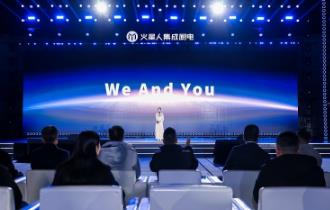
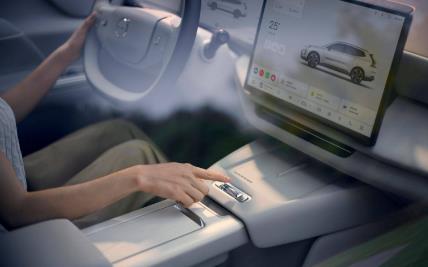
/PRZWT/The highly anticipated Huawei Gan Kun Ecosystem Conference, which has attracted much attention from the technology and automotive industries, will be held in Guangzhou on November 20, 2025. This conference will unveil a series of new developments in Huawei's Gan Kun intelligent automotive solutions. Among them, the field of intelligent cockpits will also bring about a brand-new technical architecture that disrupts experiences, reshaping the development direction of intelligent cockpits through all-sensory experiences, natural interactions, and proactive services.
The development of intelligent cockpits has entered a new stage
It is learned that this conference will showcase an intelligent cockpit system based on a brand-new architecture. Unlike the current mainstream instruction response mode, the new system may achieve a leap from "passive execution" to "active perception". The core direction of the future development of intelligent cockpits will revolve around all-sensory experience, natural interaction, and proactive service: from passive understanding to active execution. From the input based on the multi-dimensional perception information environment to the completion of the service to form a closed loop. The intelligent cockpit will be more like a true human assistant, and the vehicle itself will also understand the user better because of the HarmonyOS cockpit.
The MoLA architecture reshapes the new standard for the cockpit
Since Harmony Space 5, the HarmonyOS cockpit has adopted the MoLA architecture, organically integrating multimodal perception, general large models, and vertical domain agents to build a complete chain from user intention understanding to vehicle hardware execution, bringing the intelligent capabilities of the cockpit to a new level. It is learned that at this event, a capability similar to a personal butler will also be released for the cockpit, which can enhance the cockpit's intelligent capabilities to a higher level. In the actual experience, the Harmony Space 5 currently equipped with MoLA has achieved outstanding capabilities such as three major error correction capabilities for navigation, oral vehicle control, mixed layout of text, images and short videos, and sleep care.
Build a sustainable and evolving cockpit ecosystem
During the conference, the HarmonyOS cockpit will also reveal the evolution direction of the future intelligent cockpit ecosystem. At present, the levels of assisted driving are classified from L1 to L5, with each level representing different capabilities from low to high. The birth of the MoLA architecture has significantly widened the experience gap with ordinary intelligent cockpits and can continuously enhance the intelligence level of the cockpit through its own evolution. It is worth looking forward to for the industry whether there will be a similar classification of grades to that of assisted driving in the future intelligent cockpit field.